


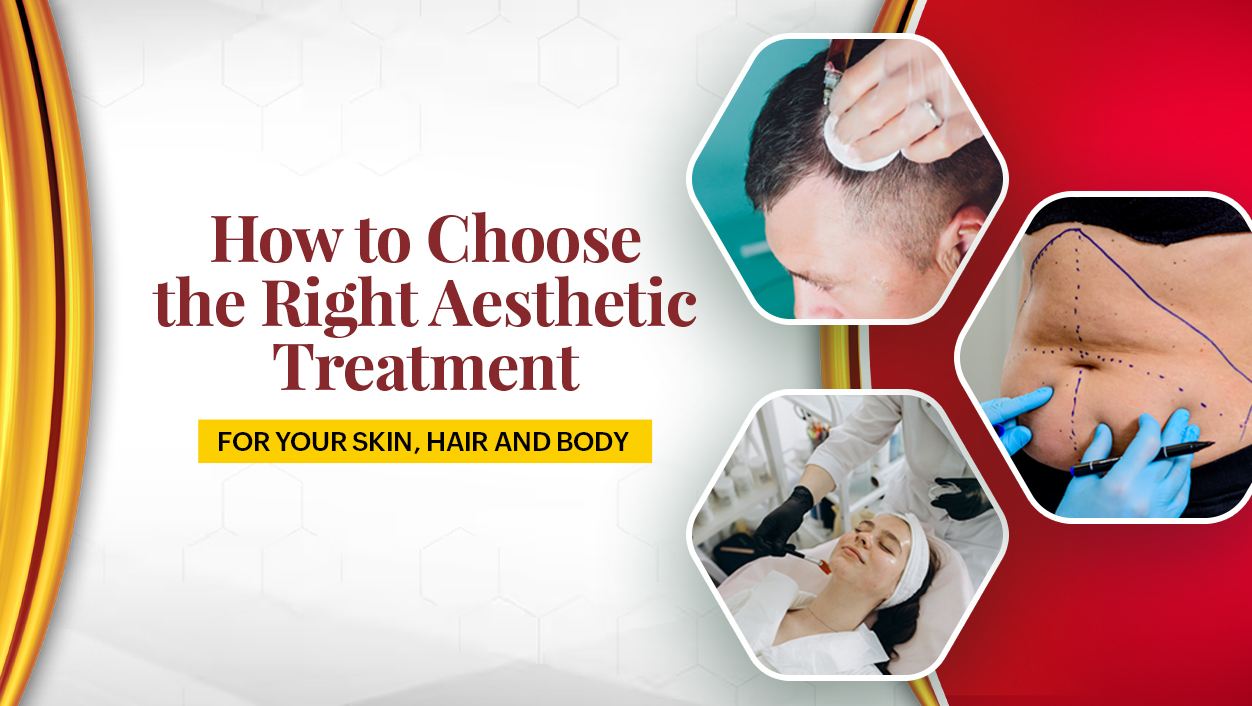
How to Choose the Right Aesthetic Treatment for Your Skin, Hair and Body
When considering aesthetic treatments, whether for aging skin, hair loss or body contouring, the decision can feel overwhelming. The market is flooded with options, terminology, and promises. But choosing the right treatment isn't about what's trending. It's about understanding what your specific concern is, how different procedures work, and which approach aligns with your goals, lifestyle, and comfort level. This guide breaks down the major aesthetic treatment categories, explains how they address common concerns, and outlines the key factors to consider before committing to any procedure. Before exploring treatments, identify the specific issue you want to address. Aesthetic concerns typically fall into three categories, though many people have concerns across multiple areas. Skin concerns include fine lines and wrinkles, pigmentation problems (dark spots, uneven tone), texture irregularities, acne scars, and loss of volume. These range from superficial issues affecting only the top skin layers to deeper structural concerns involving collagen and elastin breakdown. Hair concerns primarily involve thinning, hair loss or poor texture. Hair loss can be hereditary (androgenetic alopecia), stress-related, nutritional or medical. Understanding the underlying cause influences which treatment will be effective. Body concerns include localized fat deposits, skin laxity, cellulite appearance, and body contouring after significant weight loss or pregnancy. These often require different approaches than facial treatments because body skin has different thickness and elasticity characteristics. Skin treatments range from minimally invasive to surgical, depending on depth and intensity. Topical and Chemical Approaches Chemical peels use controlled application of acids to remove surface skin layers, allowing newer skin to emerge. Strength varies from light (glycolic acid) to medium (TCA) to deep (phenol), with deeper peels addressing more significant concerns but requiring longer recovery. Light peels are suitable for maintenance and mild pigmentation; medium peels treat deeper wrinkles, moderate scars, and stubborn pigmentation; deep peels are reserved for severe damage but involve substantial downtime. Microdermabrasion and dermabrasion use physical exfoliation, either fine crystals or a specialized instrument, to resurface the skin. These work well for shallow scars, light hyperpigmentation, and surface texture, but aren't suitable for active acne or sensitive skin. Laser and Light-Based Treatments Laser skin resurfacing uses focused light energy to remove damaged skin layer by layer. Different laser types target different concerns: ablative lasers (like CO₂) vaporize skin for dramatic results but require significant healing; non-ablative lasers heat deeper layers without removing surface skin, offering gentler results with minimal downtime. Intense pulsed light (IPL) uses broad-spectrum light to address pigmentation, sun damage, and redness without the precision of targeted lasers. These treatments stimulate collagen production and work best on lighter skin types, though newer technologies accommodate diverse skin tones more safely. Injectable Treatments Neuromodulators (commonly called Botox treatments) work by relaxing the muscles that create expression lines. They're effective for forehead lines, crow's feet, and frown lines between eyebrows. Results appear gradually over 3-7 days and peak at two weeks, lasting approximately three to four months. Dermal fillers restore volume loss due to aging or weight loss. Unlike neuromodulators that relax muscles, fillers physically add volume beneath wrinkles and fine lines. Types include hyaluronic acid (temporary, lasting 6-12 months), calcium hydroxylapatite (longer-lasting, 12-18 months), and fat transfer (using your own fat, potentially longer-lasting). Fillers also enhance lips, cheekbones, and chin definition. Collagen Induction Therapy Microneedling creates controlled micro-injuries to stimulate the body's natural collagen and elastin production. The procedure uses a device with fine needles to create channels in the skin. Over weeks and months, this triggers healing response, leading to improved texture, reduced fine lines, and better pigmentation. Microneedling suits most skin types and tones safely, with minimal downtime compared to laser treatments. Combination Approach Many clinicians recommend combining treatments for optimal results. For example, a patient with deep wrinkles and pigmentation might benefit from a light chemical peel followed by targeted filler in specific areas, with maintenance neuromodulator treatments. Hair loss treatment effectiveness depends heavily on the underlying cause. Before committing to any procedure, understand whether your hair loss is genetic, nutritional, hormonal, stress-related or medical. Regenerative Approaches Platelet-rich plasma (PRP) therapy involves drawing a small blood sample, processing it to concentrate growth factors, then injecting it into the scalp. PRP stimulates dormant hair follicles and strengthens existing hair. It's particularly effective for early to moderate hair thinning and shows best results over a series of treatments (typically 3-4 sessions over several months). Stem cell therapies and exosome treatments are emerging options that work similarly, stimulating follicle health and promoting new growth, though long-term data is still being collected. These suit patients seeking non-surgical options for hair regeneration. Hair Transplantation Hair transplant surgery moves hair-bearing scalp from dense areas (usually the back and sides of the head) to thinning areas. The procedure is permanent because transplanted hair retains its genetic characteristics. Modern techniques like Follicular Unit Extraction (FUE) are minimally invasive compared to older strip methods, with no linear scars. Hair transplantation works best when there's sufficient donor hair and realistic expectations about density. Results appear over 6-12 months as transplanted hairs shed initially, then regrow permanently. Maintenance and Preventive Options Medical treatments for hair loss slow progression and, in some cases, regrow limited hair. These require ongoing use to maintain results, making them more of a management strategy than a cure. Body aesthetic concerns require different approaches than facial treatments because body skin behaves differently and downtime considerations differ. Non-Surgical Fat Reduction Laser lipolysis and ultrasound-assisted techniques can reduce fat in specific areas, abdomen, flanks, thighs, arms, without surgery. These work gradually, with results appearing over 4-12 weeks as the body naturally processes liquefied fat. Results are modest compared to surgical liposuction but suit patients wanting minimal downtime. Radiofrequency and ultrasound technologies also tighten skin by stimulating collagen, addressing both laxity and mild fat deposits simultaneously. Surgical Body Contouring Liposuction removes unwanted fat deposits surgically. Traditional liposuction uses suction cannulas; newer variations incorporate laser or ultrasound to liquefy fat first, reducing trauma. Results are immediate and dramatic, but require anesthesia and recovery time. Abdominoplasty (tummy tuck) addresses excess skin and fat in the abdominal area, often combined with muscle tightening. This suits patients with significant loose skin, particularly after pregnancy or major weight loss, but involves more substantial surgery and recovery than liposuction alone. Body lifts address multiple areas, arms, thighs, buttocks, through strategic skin removal and tightening. These procedures are more extensive than targeted treatments and require careful consideration of scarring and recovery. What is your concern's severity? What is your skin type and tone? How much downtime can you manage? What are your expectations? What is your budget and commitment level? Do you have any medical conditions or medications affecting treatment safety? Assessment of your concern from multiple angles, including how it affects you emotionally and functionally Honest feedback about realistic outcomes for your specific situation Explanation of options, including pros, cons, risks, and recovery Discussion of alternatives you might not have considered Customized recommendations tailored to your goals, not standardized recommendations for everyone Clear information about what happens before, during, and after treatment Pricing transparency and discussion of potential additional costs Red flags include practitioners promising dramatic results, refusing to discuss risks, pressuring decisions or suggesting multiple treatments simultaneously without clear reasoning. Choosing the right aesthetic treatment requires moving beyond marketing and trend-chasing. It demands understanding your specific concern, learning how different procedures actually work, acknowledging your lifestyle and recovery tolerance, and setting realistic expectations aligned with your goals. The best treatment is the one that addresses your actual concern, fits your lifestyle, and comes from a qualified, transparent practitioner who prioritizes your wellbeing over revenue. Take time with the decision. Aesthetic treatments are rarely emergencies. Careful consideration upfront prevents regret and misaligned outcomes.Understanding Your Concern: Skin, Hair or Body
Skin Treatments: From Surface to Depth
Hair Treatments: Addressing Causes, Not Just Symptoms
Body Treatments: Contouring and Tightening
Key Questions Before Choosing an Aesthetic Treatment
The Consultation: What to Expect
A thorough consultation with a qualified plastic surgeon is non-negotiable. During consultation, expect:
Final Thoughts